Important Note About Our Services
In-House Plumbing Company specializes exclusively in full residential sewer pipe replacement, particularly aging cast iron sewer systems in older homes.
We do not install, repair, diagnose, or replace pressure reducing valves (PRVs), water pressure regulators, water lines, or general plumbing fixtures.
This article remains on our website for educational purposes to help homeowners better understand what pressure reducing valves are, how they work, and why they are sometimes recommended.
We are not a general plumbing service company and do not perform water pressure diagnostics or pressure reducing valve installation. Homeowners experiencing active water pressure problems should contact a licensed plumber that performs those services.
Why We Wrote This Article
In the last five to 10 years, we started getting calls from customers asking about pressure reducing valves. What wasn’t an issue before suddenly not only became an issue but is also getting worse with each passing year.
Because we’re getting more questions about the valve, I thought it would be helpful for everyone to write a blog post about whether or not you need to install a pressure reducing valve.
(Hint: you probably don’t.)
What Is a Pressure Reducing Valve
A pressure reducing valve is exactly what it sounds like, a valve that reduces the water pressure in your home. And water pressure, as you probably already know, is the force with which water flows through your pipes and out of different fixtures like faucets, toilets, and water heaters. High pressure is strong and low is weak.
Residential water pressure typically falls within the 45 to 80 psi (pounds per square inch) range. Anything higher than 80 psi is considered high pressure and that is what we will be discussing.
Do I Need a Pressure Reducing Valve?
That is the question we started getting and are getting more and more often. And it’s usually from someone involved in the sale of a house.
In these cases, typically the home inspector for a buyer comes in and does a pressure check. If it’s higher than 80 psi, the inspector recommends the buyer get the valve.
However, there are also times when a plumber comes out to do any kind of work, like a leaky faucet, and independently decides to run a pressure check. If the pressure is 80 psi or higher, he goes to the homeowner and recommends having the valve installed (which he, of course, is happy to do).
For the home inspector, this is an issue of liability. The city code for new home construction states the psi cannot be higher than 80. So any new home will have one of these valves installed. So the home inspector will always recommend getting the valve installed in any home, new or old, with a psi of 80 or higher.
However, for the plumber, it’s just another revenue stream. He can easily show the homeowner the code and say that if this valve is not installed, there’s a risk of damage to the plumbing fixtures and even flooding.
Why This Valve is Unnecessary
Most of the calls we get asking about this valve are for houses 10 to 25 years old and sometimes older.
Our stance: If a home that is 10, 15, or 20+ years old didn’t need the valve before, why is it suddenly a problem? There haven’t been any part failures or flooding because of the water pressure so it’s extremely unlikely the valve is now a necessity. Of course, there are always exceptions but for the majority of the cases, the valve is unnecessary.
 But we didn’t stop there. My master plumber, Bill Hoyle, and I went to a trade show a few years ago to talk to plumbing fixture manufacturers. We wanted to know if this was an issue we weren’t understanding, and if so, should we change our stance on it?
We learned two things. One, most of the manufacturers had no idea what we were even talking about when we asked about the the pressure reducing valve. So how can these valves be that important if the manufacturers have never even heard of it?
And two, all the manufacturers test their fixtures from 150 to 200 psi. Meaning, these devices — faucets, toilets, water heaters, etc. — are made to handle a psi from 150 to 200, and homeowners are being made to worry about 80 psi.
Another Reason Not to Install a Pressure Reducing Valve
The valve is a mechanical part. And anything mechanical can and will fail. When the valve fails, the water pressure in your home will be next to nothing or extremely high. So you paid to have this unnecessary part installed and now you have to pay to have it fixed and deal with poor water pressure until you do.
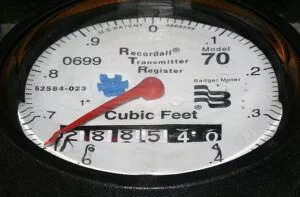
Not to mention there is no industry standard when it comes to where the valve is installed. Usually it’s installed in one of two places, buried in the ground on the main water line either near the area the water line goes into your home or at the water meter. But again, because there is no standard, the valve can be anywhere buried under the ground on the line.
We went out to a house once where the valve had failed and there was very little water pressure in the house. It wasn’t at either one of the two place I mentioned and nobody knew where it was buried along the line.
So what seems like it should be an easy fix is not because then it becomes about searching for the valve.
Fluctuating Water Pressure

One more important thing to note, the water pressure in any neighborhood can fluctuate. You can see 100 psi at one point and then 80 at another. One system in the neighborhood can show 150 psi and another show 75.
Water pressure changes. It’s the nature of the system. So unless the water pressure is constantly at a higher psi, we don’t recommend installing the valve.
Of course, I’m not saying you should never worry about your water pressure being too high period. But here at In-House Plumbing Company, we do believe it’s a very rare situation where it’s necessary. And if you think you might be one of those rare cases, we are happy to talk about it with you.
The Ongoing Talk About Pressure Reducing Valves
Unscrupulous plumbers looking for an easy way to make more money are going to continue to use scare tactics to convince homeowners they need this valve.
“Get this valve or the pressure will ruin your fixtures and your house will flood!” ← Not going to happen in most cases.
And home inspectors are going to continue to recommend the valves. Like I said, it’s a liability issue because of the current codes. So my recommendation for buyers and sellers is this.
It costs about $1,000 to $1,500 to have the valve installed. For buyers I recommend not having it installed but to get the money from the seller for the valve installation. Then put it in the bank or be prepared to give that amount to the next buyer if they insist on having the valve installed or getting the money to do it themselves.
For sellers, I recommend not agreeing to install the valve and to just give the buyer the money so they can have it in case they decide to sell in the future or install it themselves.
How We Can Help
There are a lot of dishonest companies looking out for their own best interest. It is important to us here at In-House to always be transparent and to tell everyone the truth about the industry.
While we no longer install, repair, or diagnose pressure reducing valves or other general plumbing systems, we still don’t mind helping homeowners better understand what they’re being told regarding pressure reducing valves and high water pressure concerns.
If another company is recommending a pressure reducing valve and you’re unsure about the recommendation, feel free to reach out. We are always happy to discuss your situation, answer questions, and help you better understand what you are being told — even if we are not the company performing the work.
This article remains on our website because we believe homeowners should have access to honest information regarding pressure reducing valves, fluctuating water pressure, and the realities of how these situations are often handled during home sales and plumbing evaluations.
And as always, if you have questions regarding pressure reducing valves or anything you read in this article, we are happy to speak with you and share our thoughts.
Give us a call at 972-494-1750 or email [email protected].