• Skip to main content

In House Plumbing Company

Schedule an Evaluation
Evaluation
Call Now (972) 992-1777

  • Home
  • Cast Iron Pipe Replacement
  • Pricing
  • Process
  • Case Studies
  • Warranty
  • Resources
    • About
    • Take Our Quiz
    • Before You Decide
    • Financing
    • Foundation Repair Guide
    • Businesses We Trust
    • Professional Affiliations
    • Blog
  • Reviews
  • Service Area
    • Plano
    • Rowlett
    • Wylie

Cast Iron Pipe

How Cast Iron Pipe Failure Can Impact Your Home’s Value

May 26, 2025 By In House Plumbing Company

Homeowners often think about roof repairs or kitchen upgrades when protecting their home’s value — but they overlook the pipes beneath their feet.

Failing cast iron pipes can create issues like slow drains, bad odors, foundation movement, or even sewage backups. If you plan to sell your home, these problems could cause buyers to walk away or demand major concessions.

Investing in pipe replacement services now, especially a cast iron to PVC conversion, can preserve your home’s value and make inspections go more smoothly. A modern plumbing system signals that your home is well-cared-for.

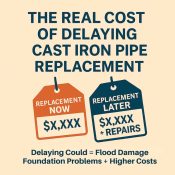
An underground pipe replacement can be a smart financial move — not just an emergency fix. Understanding your cast iron pipe replacement cost options can help you plan ahead and avoid surprises later.

Thinking long-term? 

We’re here to help you understand the condition of your pipes and plan for the future. When the time is right, we’re ready to provide an estimate tailored to your needs.

Reach out to In-House Plumbing Company today and build lasting value into your home!

Filed Under: Cast Iron Pipe

Why Underground Pipe Replacement Isn’t a DIY Project

May 19, 2025 By In House Plumbing Company

Replacing underground sewer pipes might sound simple, but in reality, it’s one of the most complex home repairs you can face. Especially when dealing with an old cast iron pipe replacement, precision and expertise matter.

In North Texas, underground pipes often run under slab foundations. Mistakes during underground pipe replacement can cause major foundation issues, plumbing failures, or even legal problems if city codes aren’t followed correctly.

When upgrading to a cast iron to PVC conversion, professionals carefully assess soil conditions, slope requirements, and pipe depth. They use proper materials and techniques to prevent future leaks, ensuring the new system lasts decades.

While the cast iron pipe replacement cost might seem high compared to a DIY effort, the long-term savings and peace of mind are worth it. Cutting corners underground usually leads to expensive repairs later.

Planning ahead? 

We’re happy to answer your questions and explain what a quality underground pipe replacement should look like. When you’re ready to move forward, we can schedule an estimate that fits your timeline.

Contact In-House Plumbing Company today for advice you can trust!

Filed Under: Cast Iron Pipe

5 Signs You May Need an Old Cast Iron Pipe Replacement
May 12, 2025 By In House Plumbing Company

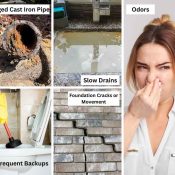
Many homeowners don’t realize their cast iron pipes are failing until serious problems appear. Here are five early signs you might need pipe replacement services:

  1. Frequent Drain Backups: If you’re clearing clogs repeatedly, the problem could be deeper in the sewer line.
  2. Slow Drains Throughout the House: If multiple drains are sluggish, it often points to a larger underground issue, not just a single clogged fixture.
  3. Bad Odors: Cracked or broken cast iron pipes can leak waste, creating unpleasant smells inside or outside your home.
  4. Foundation Cracks or Movement: Leaking pipes allow water to soak into North Texas’ clay soils. As the clay absorbs moisture, it swells, putting upward pressure on your foundation and causing it to heave. In some cases, the soil can also erode, leading to settlement. Both scenarios can cause serious structural problems.
  5. Visible Rust or Debris in Drains: Rust breaking off from deteriorating pipes can show up as flakes or sediment in your sinks, tubs, or toilets.

When caught early, an old cast iron pipe replacement — often a cast iron to PVC conversion — can prevent expensive repairs and protect your home’s structure. A trusted expert can evaluate your situation and explain whether an underground pipe replacement is necessary.

Understanding the potential cast iron pipe replacement cost ahead of time — and knowing the risks of waiting — gives you the knowledge to make the right decision for your home’s long-term health.

Curious about what’s happening under your home?

We’re always happy to answer questions and provide guidance without pressure. If you’re preparing to move forward soon, we can help you with a detailed estimate when the time is right.

Reach out to In-House Plumbing Company today and start planning with confidence!

Filed Under: Cast Iron Pipe

Understanding Cast Iron to PVC Conversion: What Homeowners Should Know
May 5, 2025 By In House Plumbing Company

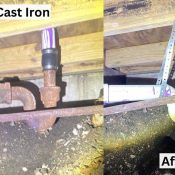
If your home was built before 1986, there’s a good chance your plumbing system includes cast iron pipes. Over time, cast iron deteriorates, leading to leaks, backups, and costly damage. That’s where cast iron to PVC conversion comes in.

PVC (polyvinyl chloride) piping offers several advantages: it’s resistant to corrosion, it’s smooth on the inside (helping waste flow better), and it has a lifespan of 50-100 years. When we perform pipe replacement services, switching from old cast iron to PVC gives homeowners a long-term solution.

The process often involves underground pipe replacement, especially for homes where the sewer lines run beneath the slab foundation. While the cast iron pipe replacement cost may seem significant at first, it can actually save thousands by preventing foundation repairs or severe backups in the future.

When planning for an old cast iron pipe replacement, it’s important to understand that no two homes are exactly alike. Soil type, home layout, and pipe depth can all affect the project scope.

Educating yourself now can help you make confident decisions when it’s time to replace your system. A knowledgeable plumber should always walk you through your options clearly, so you understand exactly what’s happening under your home.

Thinking about your options?

Whether you’re gathering information or preparing for a future project, we’re happy to offer advice. If you’re ready to move forward soon, we can schedule a detailed estimate to fit your timeline.

Contact In-House Plumbing Company today to start the conversation!

Filed Under: Cast Iron Pipe

What Makes Cast Iron Pipes Fail Faster in North Texas?
April 29, 2025 By In House Plumbing Company

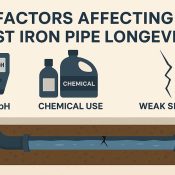
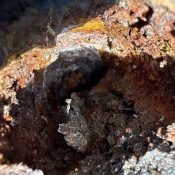
Most cast iron pipes were designed to last about 50 years — but in North Texas, it’s common to see deterioration starting between 35 and 50 years, and sometimes even sooner.

Several factors contribute:

  • Soil Acidity: Our local soils can be surprisingly acidic, speeding up the exterior corrosion of underground pipes.
  • Household Chemicals: Over time, drain cleaners, soaps, and other chemicals flow through the pipes, breaking down the interior walls.
  • Manufacturing Flaws: When cast iron pipes are made, they’re spun in molds, often resulting in one side being thinner. If the thinner side was installed facing down, it’s more vulnerable to early failure.
  • Water Leaks: Moisture under the slab can also worsen corrosion, although swelling clay soil itself doesn’t directly damage the pipes.

Understanding why pipes fail can help you plan ahead before you face major problems.

Wondering about your pipes?

We’re happy to answer questions and explain what’s happening beneath your home — no pressure, just honest advice. If you’re planning to act soon, we’re ready to help with a detailed estimate.

Talk to In-House Plumbing Company today and stay one step ahead!

Filed Under: Cast Iron Pipe

Determining Cast Iron Pipe Integrity

October 16, 2023 By In House Plumbing Company

At In House Plumbing Company serving you is our business. We service the following areas of Texas: Plano, Richardson, Garland, Dallas, and surrounding cities. We Specialize in Cast Iron Sewer Pipe Replacement.

Today, I want to talk about determining the integrity or condition of the cast iron sewer pipe currently under your home’s foundation. We get asked all the time if we can run a sewer camera and determine the integrity of that cast iron. In short, the answer is no we cannot. It’s a horrible idea and we are going to show you why in this video.

Cast iron pipe was designed to last 50 years, and the overwhelming majority of the cast iron still present in homes today has already reached, or are coming real close to reaching that lifespan. The last cast iron installed in the DFW area was about 1986. By that time, most cities had already done away with allowing new cast iron pipe to be installed, back to as early as 1975.

We’ve seen our fair share of cast iron pipes, and what I can tell you about cast iron is if it’s not bad yet, it’s going bad, and it needs to be replaced. That’s just a plain and simple fact. If I know one way to look at this is, if you were going to buy a house that had cast iron pipe, we would tell you not to buy it without taking into consideration that you will have to replace it.

We have come across instances where a 20 year old pipe had the bottom completely rotted and rusted away, rendering that pipe no good at all. We have also had instances where a pipe that was 50 years old was still okay. The truth is, if it is a cast iron pipe, it’s going to go bad and there is no doubt it will have to be replaced at some point.

There have been many situations when we would go in and try to repair a cast iron pipe, only to find that the pipe would be brittle and many times would crumble with just the touch of someone’s hand. After spending the time and money to try to repair the pipe, we ended up having to replace the pipe anyway on many occasions, costing the homeowner more money than if they just would have replaced it in the first place. In the situation where we got out with just a repair, many times it took more to repair the pipe than we thought before the job was started and the bottom line is whatever you repair today on a spot repair, you are going to replace later, making it a total waste of time and money. It just does not make sense to repair cast iron pipe in DFW today.

With that in mind, we made a decision, in 2019 or so, that we were no longer going to spot repair, or just fix one or more leaks in cast iron. Because inevitably, recurring repairs cost our customers more money in the long run and replacement is a better, more sustainable solution.

Since that decision, our company will only replace under slab cast iron sewer pipe

Let’s take a second to make sure you understand the difference between repair and replacement. Let’s say you have 60 feet of pipe under your home’s foundation, a repair would be to fix 1 or more spots by replacing 1 to 3 feet of pipe at each spot. A replacement would be to replace all 60 feet of pipe.

You should also know that many times there are multiple options as to how the pipe can be replaced. We prefer to reroute the sewer pipes if possible when replacing them, which in a normal situation saves tunneling. Tunneling is the most expensive part of cast iron sewer pipe replacement under slab foundations and our rerouting method trades that tunneling for a trench in the yard.

Rerouting could save you a significant amount of money and is always the best option if possible, however, not all houses can be rerouted. When having your cast iron pipes evaluated, make sure to ask if rerouting is an option. and hire someone who has your best interest at heart, not theirs. A trustworthy sewer repair company provides you with all of the best options available for your situation and needs.

With all of that in mind, part of what I want to show you in this video is that the sewer camera shows that the cast iron is rusted. Some would say that in this situation, it’s still in good condition because it doesn’t appear to have any cracks, breaks, or holes in it.

The camera may show the inside of the pipe, and it may look okay, but one thing to consider with a sewer pipe is that you’ve got a lot of buildup on the inside of this pipe. So, even if running a camera through it, most of the time you can’t actually see the inside of the pipe anyway due to the soap scum buildup, sewer buildup, and all kinds of materials that are just caked to the inside of the pipe. Another reason why there is no way to determine the integrity of the pipe by putting a camera inside the pipe.

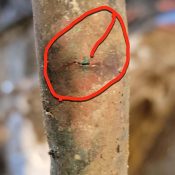
Regardless, it doesn’t matter what it looks like on the inside. One thing to really consider is the thickness of the pipe. With it being cast iron, if the inside is showing rust, so will the outside. Rust, and other factors from the pipe being in the ground, eats away at the pipe and makes it thinner and more susceptible to breaking. In short, it’s been rusting since the minute they put it in the ground!

There are essentially two things that matter. First, that it is working properly. Working properly means when you flush the toilets, run the sinks, the dishwashers, the washing machines, showers, tubs, and all the things inside the house, that the sewer and water runs into the sewer line and it’s functioning. It’s working properly when the water and waste flow through your line, underneath the house, and out into the pipes in the yard.

Secondly, what matters is if it is leaking. If so, what’s creating the leak? Is there a crack or break or hole in the sewer line? When the leak is under the slab it’s going to cause structural damage. It can lead to a damaged foundation, soggy carpet, cracked tiles and more. Another good reason for having your pipe rerouted is that the yard does not have a structure on it, so there’s no reason to worry about the types of structural damage these leaks can cause!

There is no way a camera can determine if there is a leak in a sewer system. How can you determine by putting something inside the pipe that water is escaping on the outside of the pipe? You can’t. It’s just not possible.

This is a huge misconception that our industry has done to people. I can say that at least 95% of our industry tries to find leaks with a camera, and tries to determine the integrity of the cast iron pipe with a camera. It is false. It is completely and totally junk science. Don’t fall for it.

The bottom line is, it doesn’t matter what the inside of your cast iron pipe looks like because it does not give a full picture of what could be going on. Fixing a spot now could mean it puts stress on other areas of the pipe and then you’ll have another problem. Plainly put, it’s difficult to know the line’s integrity and how much longer it’s going to last.

Watch the featured video for this post to learn more about cast iron pipe issues. In this particular video, we will be showing you an instance of just how deteriorated a cast iron pipe can get.

Every house is different and it’s important to have a full evaluation to know what you’re dealing with.
Now, let me say one other thing about cast iron pipe. The pipe that’s in the walls is different from the pipe under the house. And we’re going to talk more about that in an upcoming video.

Feel free to contact us today at 972-366-6597 should you have any questions or to schedule a free estimate and consultation for replacing your cast iron sewer pipe, also remember financing is available and we look forward to serving you soon.

Filed Under: Cast Iron Pipe

Cast Iron Pipe Replacement Buyer Beware of Companies Just Replacing Gut or Main Sewer Lines Only

August 14, 2023 By In House Plumbing Company

We are In-House Plumbing Company where serving you is our business. We service the following areas of Texas Plano, Richardson, Garland & surrounding Cities. Quickly we wanted to give you an example of something to beware of when it comes to [having your cast iron pipes replaced] but the homeowner either does not understand or the company is telling the homeowner that all, of the cast iron is replaced. Every house is different when it comes to how the sewer lines are laid out under the house, making the gut/main lines and branch lines different for each house. 

Keep in mind that rerouting the sewer pipes instead of replacing them where they lay under the foundation is always the best and least expensive option if possible, however, remember not all houses can be rerouted. Let’s walk through one example to try to help you understand and give you the best chance of getting your cast iron replaced completely, properly, and at the least expensive cost the first time so you do not have to do this more than once. 

The red lines are where the original cast iron sewer pipe was laid. The red line with pink next to it would be considered the gut or main line. The remainder of the red lines would be considered the branch lines for this home’s sewer system. The green lines are where we installed the new PVC pipe by rerouting the lines toward the outside. As you can see if the main or gut line was the only part of the pipe replaced you would still have a considerable amount of cast iron pipe under the slab. Another important thing to understand is once the main or gut line is replaced, you really box yourself into a corner when it comes to replacing the rest of the lines later, especially since all the branch lines are still connected to the main or gut line. You either must replace the branch lines right where they are or you must start completely over and do the reroute, which means everything you spent on the main or gut line replacement would be wasted. 

Unfortunately, we went to a house/not this one but like this recently where the homeowner was selling the house and a company had replaced the main line only once the main line was replaced, they determined the sewer system was still leaking on the pipes they had not replaced and so they went back to the homeowner for more money, which is when he called us for a second opinion. Unfortunately, there was just no way we could help him without starting completely over, but he still owed the current company 30,000.00 and they were not finished. Because our pricing is typically a lot less than most companies and very few of our complete reroutes cost more than 30,000.00, it is highly likely he would have paid a lot less than 30,000 to us from the beginning and got all the cast iron replaced with PVC by rerouting the pipes. 


Another thing to keep in mind is when replacing part of the pipes now and part later, you can end up with similar concerns to what we are discussing here as well as it will always cost you more long term to replace the pipes separately than it would to replace them all at one time. We understand not all people can do everything at once, we just want you to be informed so you can make the best decision with a long-term perspective in mind. Let’s compare some cost examples for this house. By rerouting this house, we saved a lot of tunneling, which is the most expensive part of cast iron sewer pipe replacement under slab foundations, and traded that tunnel for a trench in the yard. Our rerouting estimate was 24.5% less than replacing the pipes where they were laid originally and rerouting all the pipes was 35% more than just replacing the main or gut line in this case. Make sure you know exactly what is being proposed by the company you chose to replace your cast iron pipes and don’t forget to ask if rerouting is an option and hire someone who has your best interest at heart, not theirs when having your cast iron pipes replaced.

Feel free to contact us today at 972-366-6597 should you have any questions or to schedule a free estimate and consultation, we look forward to serving you soon.

Filed Under: Cast Iron Pipe

« Previous Page

Quick Links

  • Home
  • Cast Iron Pipe Replacement
  • Pricing
  • Process
  • Case Studies
  • Warranty
  • Resources
    • About
    • Take Our Quiz
    • Before You Decide
    • Financing
    • Foundation Repair Guide
    • Businesses We Trust
    • Professional Affiliations
    • Blog
  • Reviews
  • Service Area

Service Areas

CITY1
CITY2
CITY3
CITY4
CITY5

See Complete Service Area

Contact Us

In-House Plumbing Company

5903 Curtis Dr.
Allen, Texas 75002

(972) 992-1777


Hours of Operation

Mon – Fri: 8 AM – 5 PM
Closed 12 PM – 1 PM for Lunch
Sat: Closed
Sun: Closed


William Hoyle M - 5556

Connect With Us

Copyright © 2026- | Privacy Policy | Terms & Conditions | Design by: Big West Marketing

Click to Call

Tap to Text